Product
Everything a sequence does, except the part where it ruins your market
Beacon replaces the cadence with a loop: research, one best action, human judgment, reaction. Here's what that looks like in practice.
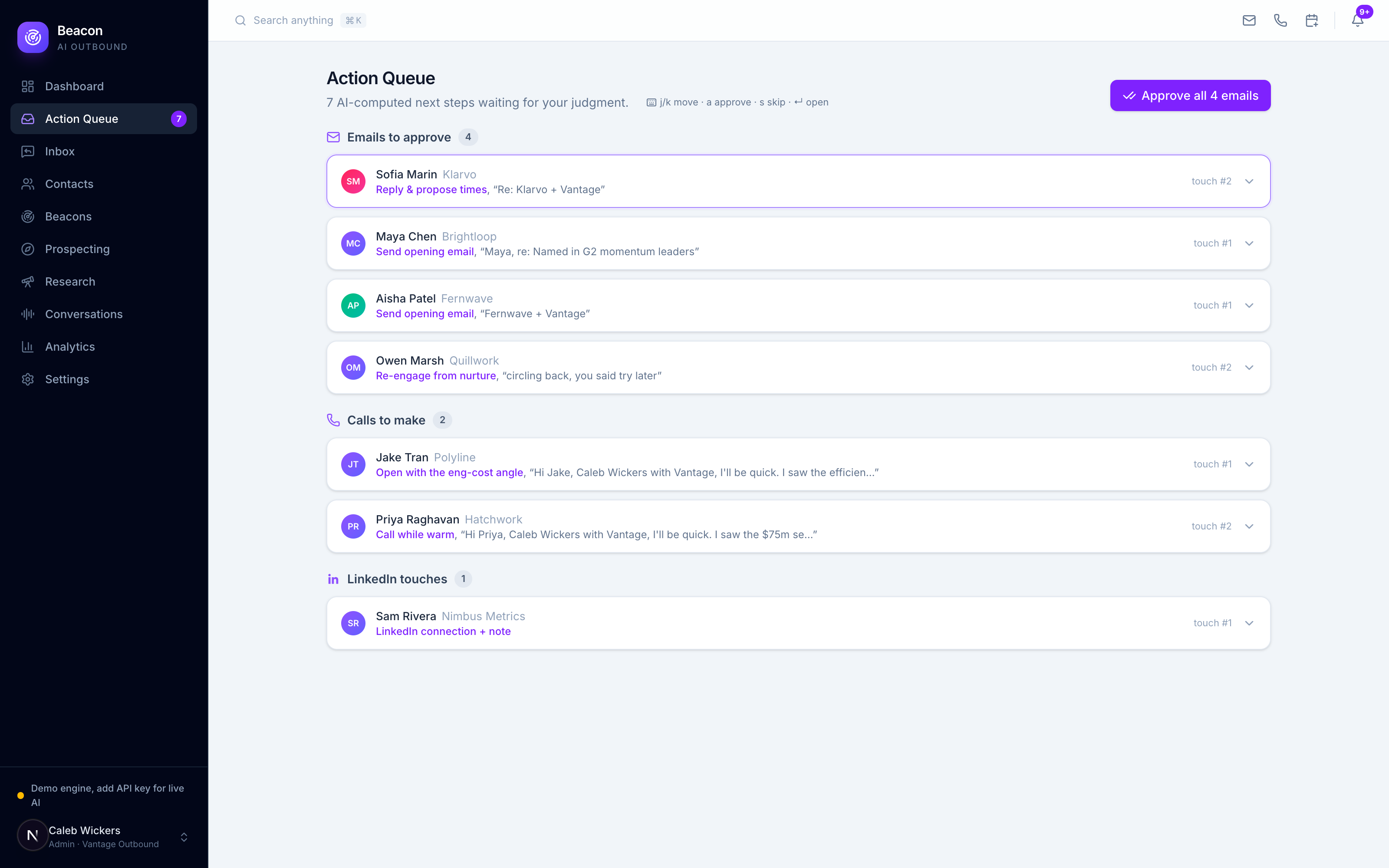
The action queue
Your day, computed
Open the queue and judge — don't compose. Each card is one prospect, one drafted touch, and the reasoning behind it. Keyboard-first review: approve, edit, or skip in seconds. Approve at 11pm and it sends inside tomorrow's window.
- One pending step per contact, regenerated the moment reality changes
- Rationale on every draft: the signal, the angle, and why this channel
- Deliverability lint flags spam words and broken variables before you send
- Bulk-approve when you trust it, line-by-line when you don't
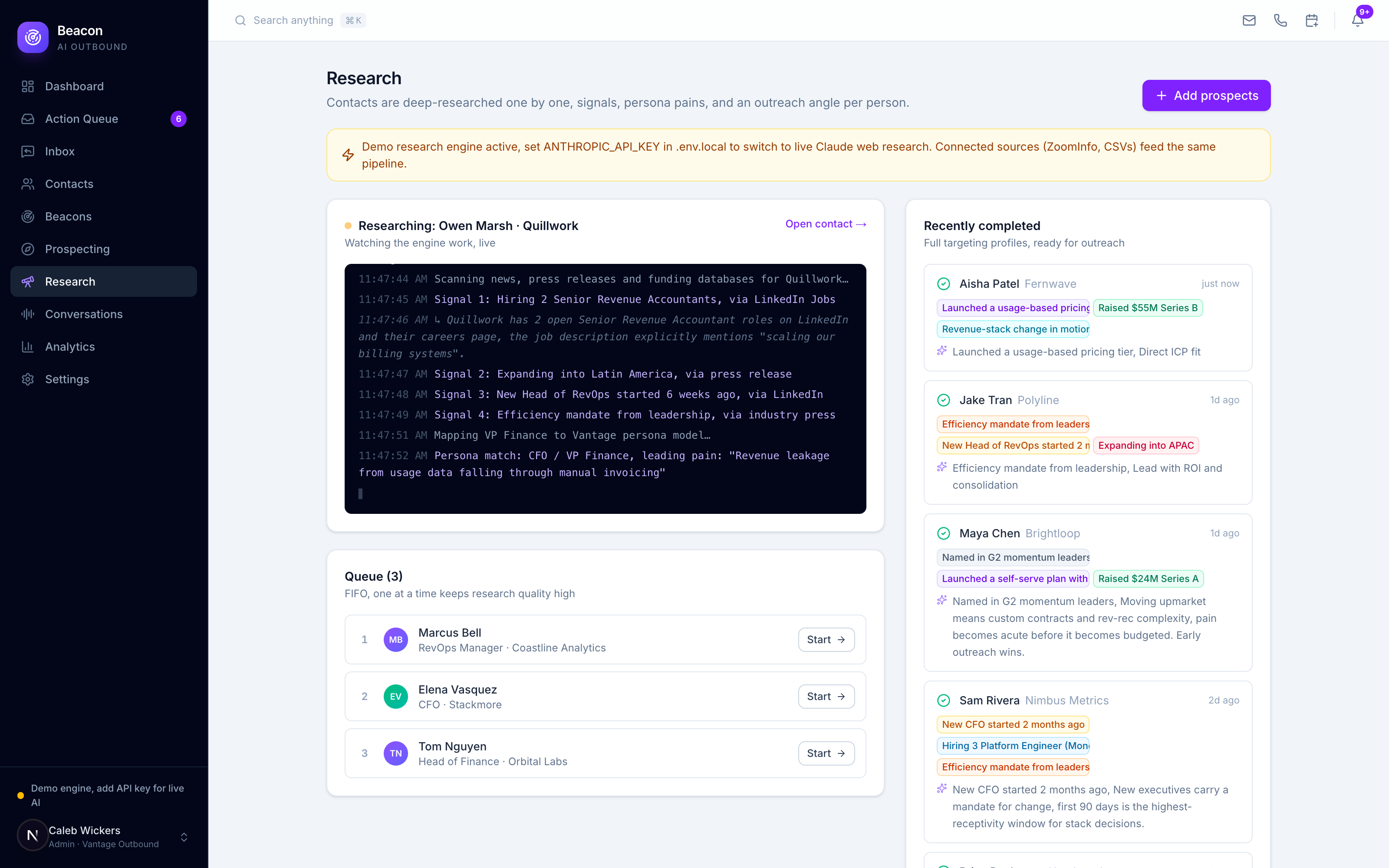
Research
A dossier on every prospect, before the first touch
Beacon's research agent works through your list one contact at a time, building a dossier (everything we found on the prospect, in one place): company summary, live buying signals with sources, inferred priorities, and a recommended angle tied to your product. It re-scans on a cadence you control, so a 'no' in March becomes a researched 'why now' in June.
- Funding, hiring, exec moves, product launches, expansion, cost pressure
- Sources attached to every claim — click through and check
- Automatic re-scans by status: nurturing accounts get watched, not forgotten
- New signal found? The owner gets notified and the plan updates
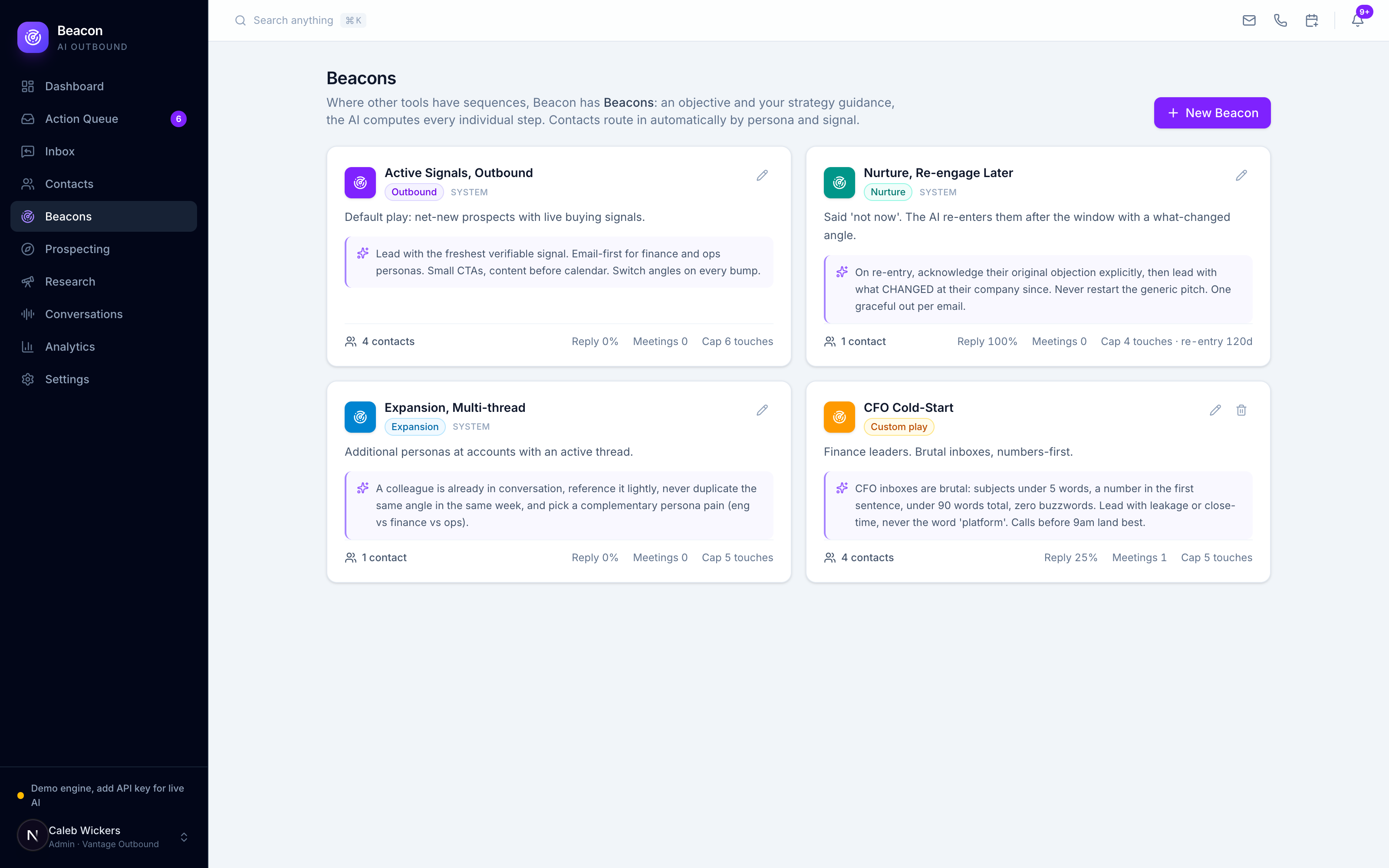
Beacons
Objectives with guidance, instead of sequences with steps
A Beacon (one campaign, in Beacon's language) holds an objective — outbound, nurture, expansion, or custom — and plain-language strategy: tone, angle, pacing, rules of engagement. The AI plans every step within those rails. Prospects route to the right Beacon automatically by persona and signal.
- Write guidance like you'd brief a new rep; it's fed verbatim to the drafting engine
- Touch caps per Beacon, nobody gets a 14th follow-up
- Nurture re-entry windows: 'not interested' has a comeback date
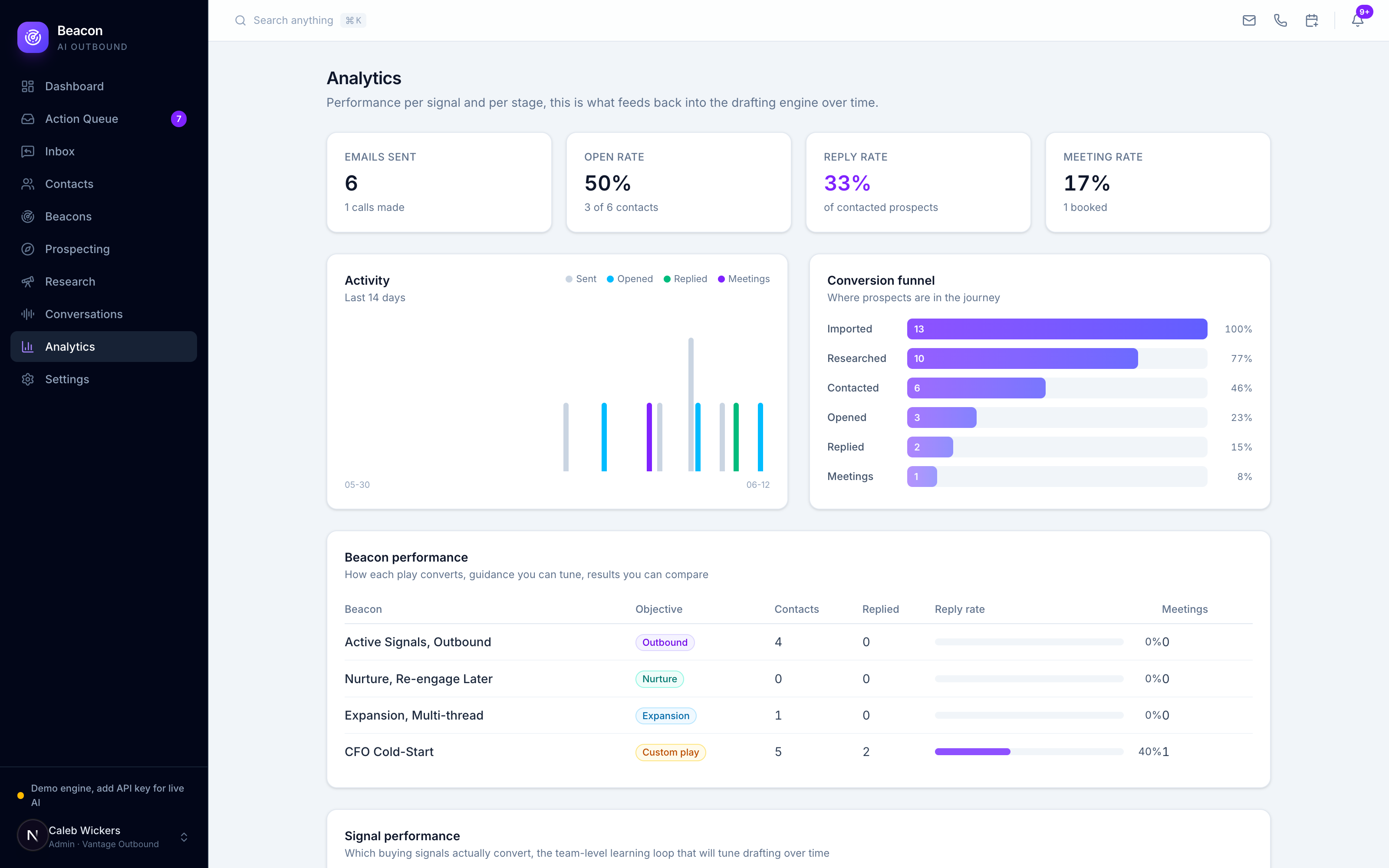
- Compare reply and meeting rates per Beacon and tune the guidance
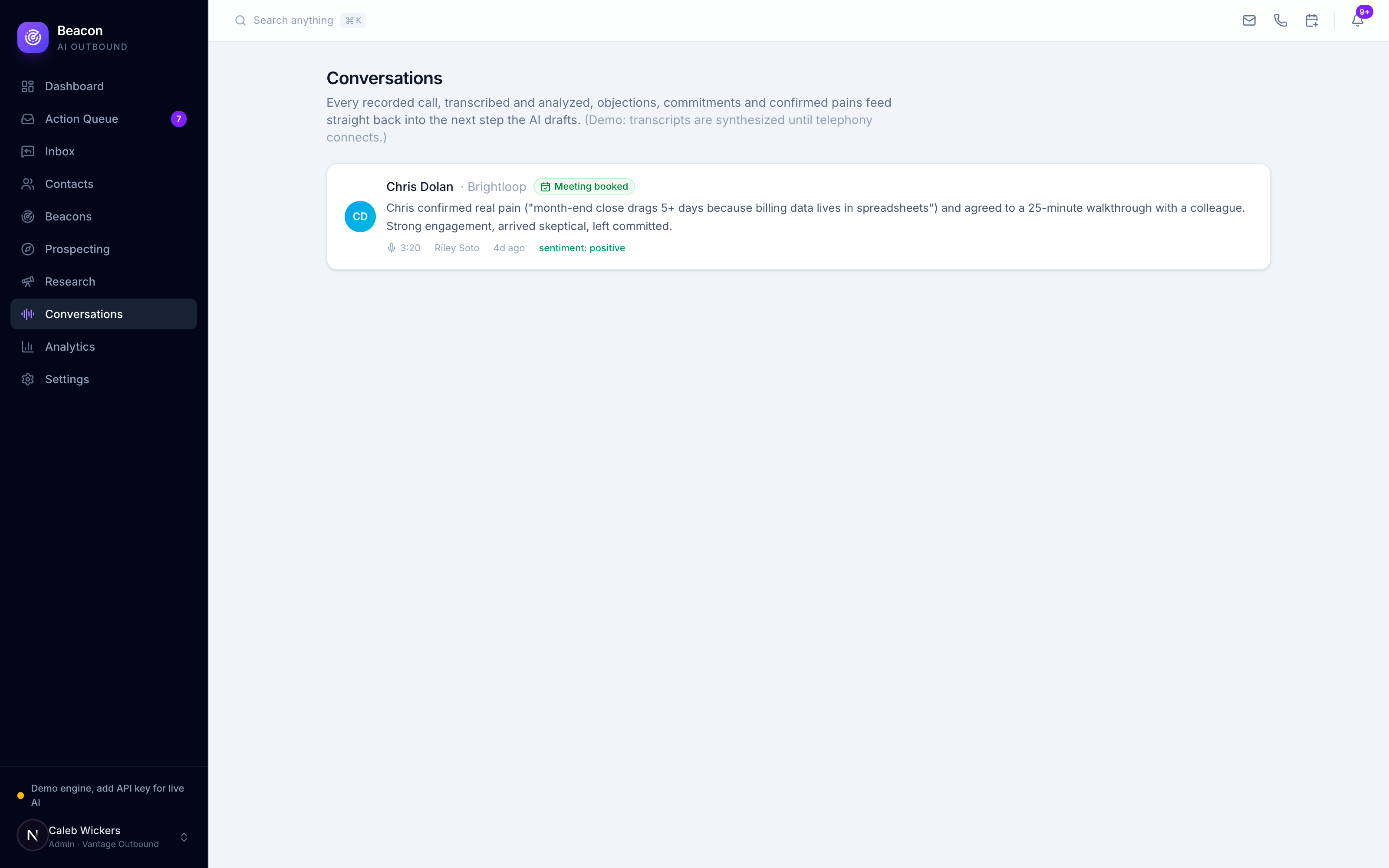
Calls and conversations
Talk tracks going in, intelligence coming out
When the next best action is a call, the card arrives with an opener, the prospect's likely pains, discovery questions, and objection handling, all from the dossier. Connected calls produce transcripts, summaries, and extracted objections that steer the next touch.
- Pre-call context card: who they are, what changed, what to say
- Sentiment, objections, commitments, and confirmed pains per call
- The recap email quotes what they actually said on the phone
- Every outcome (no answer, voicemail, objection, meeting) reroutes the plan
Prospecting and the win profile
It learns who buys from you, then finds more of them
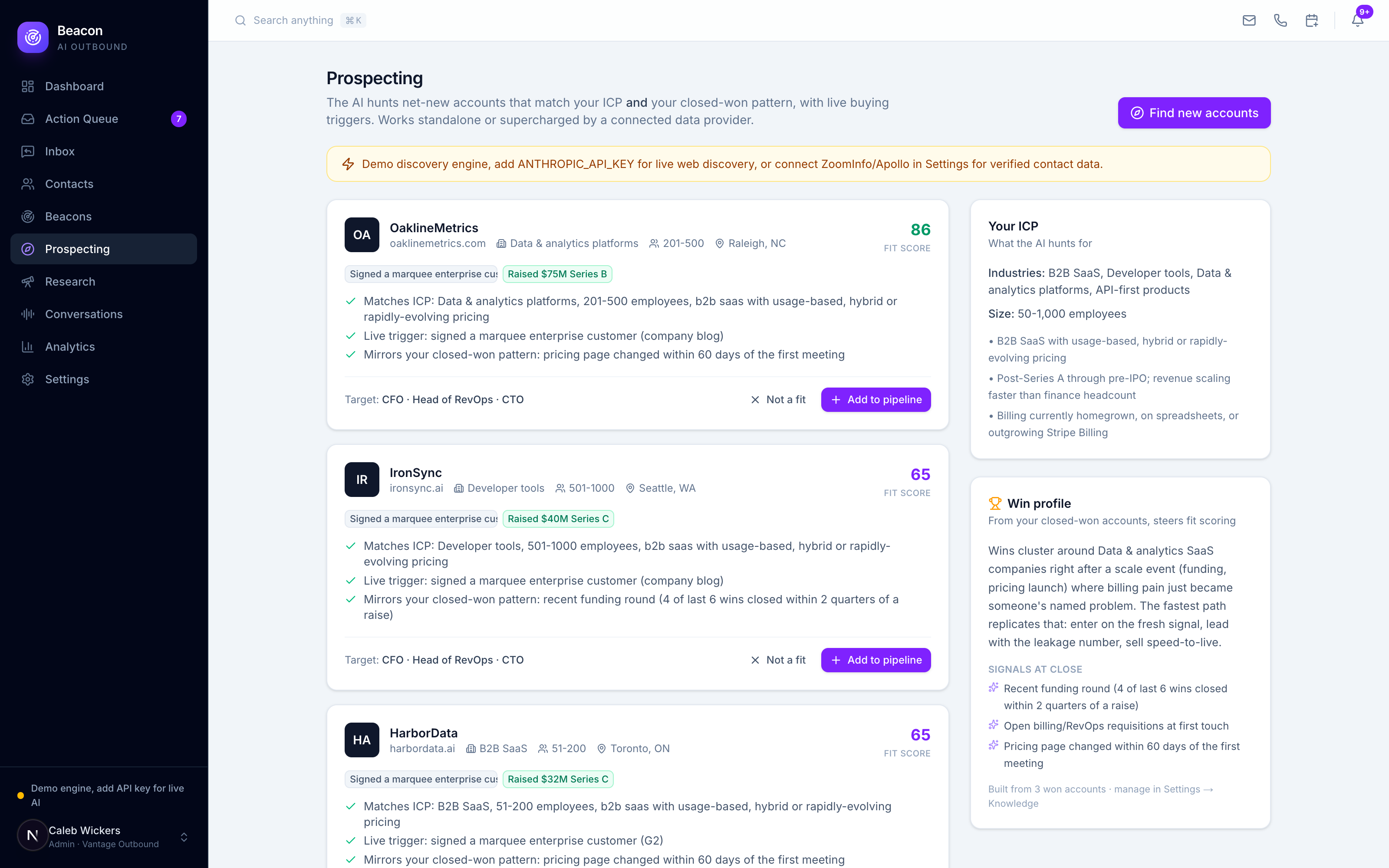
Import closed-won accounts and Beacon builds a win profile (the pattern behind the deals you actually close): common traits, why they bought, signals present at close. Prospecting suggests lookalike companies with fit scores and the right people to contact, with or without ZoomInfo or Apollo connected.
- Win profile from your actual wins, not a persona workshop
- Fit-scored company suggestions with the evidence listed
- One click from suggestion to researched contact in the queue
- Territories route new accounts to the right rep automatically
Inbox and analytics
Replies in one place, learning in one chart
The reply inbox pairs every response with the AI's drafted answer, ready for review. Analytics shows which signals actually convert, how each Beacon performs, and the health of your whole book: touches per meeting, nurture re-entries, suppression (your do-not-contact list), caps.
- Open and click tracking built in (and a toggle to turn both off)
- Signal performance: which triggers earn replies, fed back into drafting
- Book health: your market treated as an asset, reported like one
- Full CSV export of contacts and activity — your data is yours
Always current
The playbook updates itself
A saved sequence is frozen the day you write it; the market it targets is not. Beacon's outreach engine runs on the latest AI models and is continuously tuned to the sales tactics and deliverability rules that are working right now — subject-line norms, mailbox-provider requirements, CTA etiquette — so every workspace gets the current playbook without lifting a finger.
- Drafting engine upgraded to the newest models as they ship
- Prompts tuned to current-year outreach research and etiquette
- Deliverability rules track Gmail and Outlook sender requirements
- Improvements land for every customer at once, no migration, no retraining
Head to head
Where each philosophy wins
Honest version: if your motion is 300 dials an hour into an enterprise TAM (total addressable market) of 50,000 accounts, buy the dialer. If your market is small enough that every name matters, that math flips.
Swipe the table sideways to compare →
| Capability | Sequencers | Dialers | Beacon |
|---|---|---|---|
| Per-contact research before every touch | |||
| Next step computed from live prospect behavior(branching — pre-built if/then forks — is not adapting) | |||
| Context in hand when a call connects | |||
| 'Not interested' gets a comeback date + signal watch | |||
| Send caps, windows, and auto-suppression by default | |||
| Works for 1-10 seat teams without an admin | |||
| 300 dials an hour(we think that's the problem) |
The demo is the argument.
Click through the real interface with sample data and watch the plan change when the prospect acts.